
Year-End Tax Moves For Individuals That Could Pay Off Before 2027
The 2026 tax year ends on December 31, and the choices you make between now and then can change what you owe in April. This year’s planning is harder than usual. The One Big Beautiful Bill Act (OBBBA) added new deductions and limits, and some of them take effect for the first time in 2026. Others from last year may still be unfamiliar. Here are five areas to review before the calendar turns to 2027.
Standard Deduction vs. Itemizing
Taxpayers can choose to itemize certain deductions on Schedule A or take the standard deduction based on their filing status instead. Itemizing deductions when the total exceeds the standard deduction saves tax, but it makes filing more complicated.
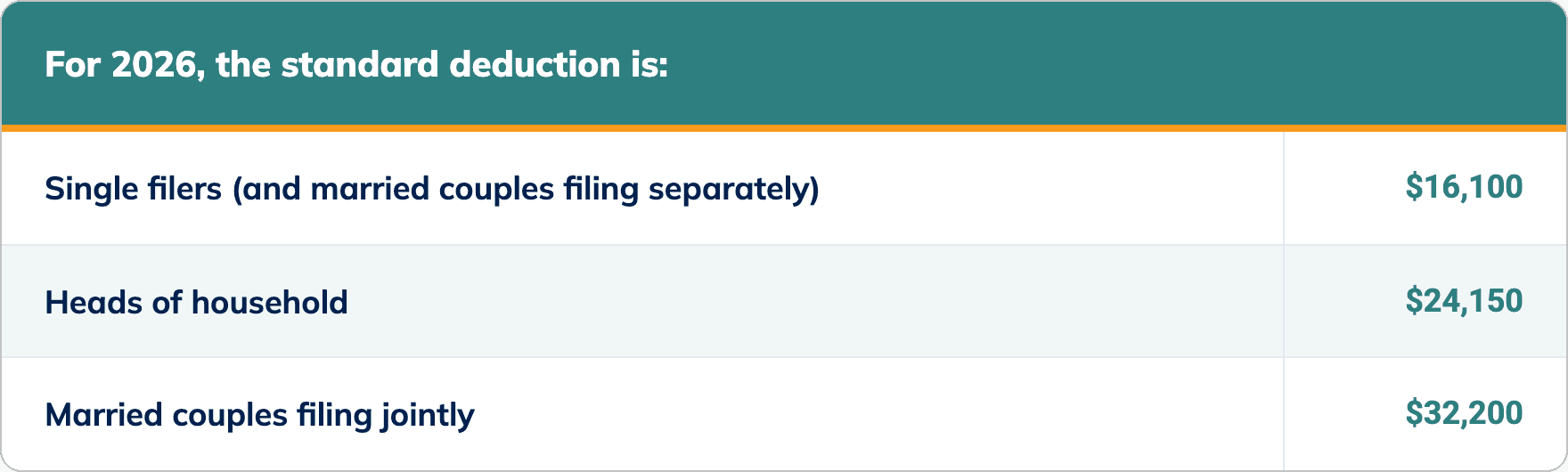
Taxpayers who are age 65 or older or blind can claim an additional standard deduction of $2,050 ($1,650 per spouse if married). For taxpayers both over 65 and blind, the additional deduction is doubled.
With such large standard deduction amounts, you may not give much thought to itemizing. However, certain temporary OBBBA provisions (see below) could make itemizing more beneficial for some taxpayers this year.
But high earners should note that the OBBBA’s new limit on itemized deductions kicks in for the 2026 tax year. The limit effectively caps itemized deductions for taxpayers in the highest tax bracket (37%) at 35 cents per dollar (down from 37 cents per dollar).
The senior deduction
Through the 2028 tax year, taxpayers age 65 or older by the end of the tax year may qualify for an additional $6,000 “senior” deduction ($12,000 for joint filers if both spouses qualify). Eligible taxpayers can take this tax break whether they itemize or claim the standard deduction, and it’s in addition to the existing extra standard deduction for seniors.
However, the new deduction begins to phase out when modified adjusted gross income (MAGI) exceeds $75,000 for single filers or $150,000 for joint filers. The deduction is reduced by 6% of MAGI exceeding these thresholds. Married taxpayers must file jointly to qualify, and each eligible individual must have a valid Social Security number.
If your MAGI might exceed the applicable phaseout threshold, you may be able to take steps before year end to reduce it and maximize your senior deduction. For example, if your budget allows and you’ve already taken your required minimum distribution for the year (if applicable), consider cutting back on taxable retirement plan distributions for the rest of the year.
If you’re still working, increasing your retirement plan contributions for 2026 can reduce your MAGI. Whether you’re retired or still working, loss harvesting (see below) and other investment-related strategies can also reduce your MAGI.
Changes to charitable giving deductions
Before the OBBBA, taxpayers who didn’t itemize generally couldn’t deduct their charitable contributions. Beginning in 2026, however, nonitemizers can deduct up to $1,000 in qualifying cash donations ($2,000 for joint filers). The deduction generally applies to cash contributions made directly to qualifying public charities. Donations to donor-advised funds and most private foundations, as well as noncash contributions, aren’t eligible.
Cash donations include not just actual cash but gifts made by check, debit or credit card, payment app, or payroll deduction. If you might be eligible for this new deduction, be sure to properly substantiate your cash donations. To be deductible, they must be:
Supported by a bank record, receipt or written communication from the charity if they’re under $250, or
Substantiated by the charity if they’re $250 or more.
The OBBBA also introduced a new limitation on charitable deductions for taxpayers who itemize. Beginning in 2026, only contributions exceeding 0.5% of adjusted gross income (AGI) are deductible. For example, if your 2026 AGI is $100,000, you can’t deduct the first $500 of your charitable contributions. Amounts disallowed by this floor generally can’t be carried forward unless the taxpayer also has contributions exceeding the applicable percentage-of-AGI deduction limits. (For instance, deductions for cash gifts to public charities generally can’t exceed 60% of your AGI.)
These changes make the strategy of “bunching” charitable contributions into a single tax year worth considering. Traditionally, taxpayers have used this approach to accumulate enough itemized deductions to exceed the standard deduction in alternating years. Now, concentrating donations in one year may also help reduce the impact of the new 0.5%-of-AGI floor. However, the potential benefits depend on your income, other itemized deductions and the timing of your contributions.
Increase in the SALT cap
The OBBBA temporarily increased the limit on state and local tax deductions (the SALT cap) through the 2029 tax year. For 2026, taxpayers who itemize can deduct up to $40,400 ($20,200 for married couples filing separately).
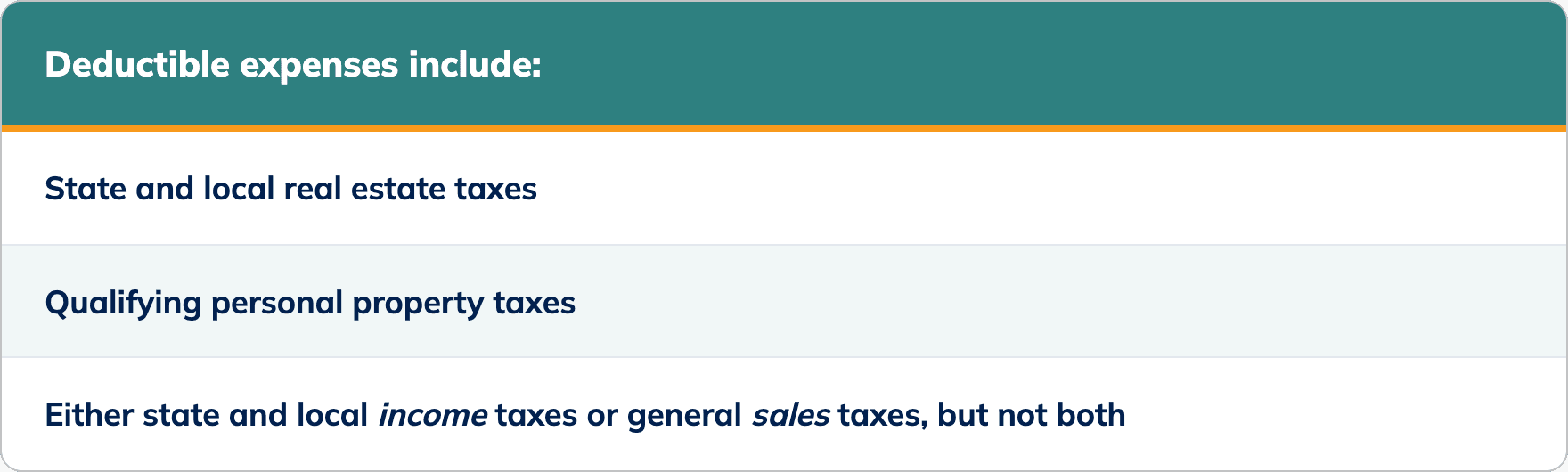
The SALT cap is scheduled to return to $10,000 ($5,000 for separate filers) in 2030.
The higher limit may provide substantial tax savings, depending on your SALT expenses and MAGI. For 2026, the deduction cap is reduced by 30% of MAGI exceeding $505,000 ($252,500 for separate filers), but it can’t fall below $10,000 ($5,000 for separate filers). Both the higher cap and the income threshold are scheduled to increase by 1% annually through 2029.
If your 2026 SALT expenses are below the applicable cap, consider whether accelerating certain tax payments into 2026 could increase your deduction. For example, you may benefit from paying property taxes before year end, provided they’ve already been assessed, or making eligible state estimated income tax payments.
Tax loss harvesting
Although economic conditions have been mixed in 2026, the stock market generally has performed well. If you have underperforming investments in your taxable portfolio, consider selling them before year end to harvest capital losses that can offset taxable capital gains you’ve already recognized.
If your capital losses exceed your gains, you generally can deduct up to $3,000 of the excess against ordinary income ($1,500 for separate filers), with unused losses carried forward to future tax years. Harvesting losses also may help reduce or eliminate your exposure to the 3.8% net investment income tax (NIIT). It applies to some or all net investment income when MAGI exceeds $200,000 per year ($250,000 for joint filers and $125,000 for separate filers). The NIIT thresholds aren’t annually indexed for inflation, so more taxpayers are being hit by this tax.
Be mindful of the wash-sale rule, however. It generally disallows a loss deduction if you purchase substantially identical securities within 30 days before or after the sale. The rule can also apply to purchases made by your spouse or through an IRA. In most cases, a disallowed loss is added to the tax basis of the replacement securities, deferring the tax benefit rather than eliminating it.
Let’s Build Your Year-End Strategy
Year-end is when tax planning has the most effect, and the window is closing. The OBBBA created real opportunities, and it also created traps for people who don’t see them in time. The right strategy depends on your income, your investments and your goals, and a generic checklist can’t account for those.
At CSH, we help individuals and families work through these decisions every year. We know the OBBBA’s changes in detail and can turn them into a plan that fits your situation. Contact our team today to schedule a year-end planning conversation, while there’s still time to act. Reach out to your CSH advisor or call us to get started.